
US consumer companies are increasingly recognizing the strategic value of legacy Product Lifecycle Management (PLM) data in driving engineering opportunities that enhance operational efficiency. By extracting, integrating, and analyzing historical PLM information, these organizations are optimizing processes, accelerating product innovation, reducing costs, and achieving faster time-to-market. The transition from siloed, legacy PLM systems to integrated, AI- and cloud-enabled platforms is central to this transformation. However, companies face significant challenges, including data integration complexity, organizational resistance, and technical debt. Best practices and case studies demonstrate that successful initiatives yield measurable improvements in productivity, cost savings, and innovation capacity, positioning firms to compete more effectively in a rapidly evolving consumer landscape.
Industry Overview
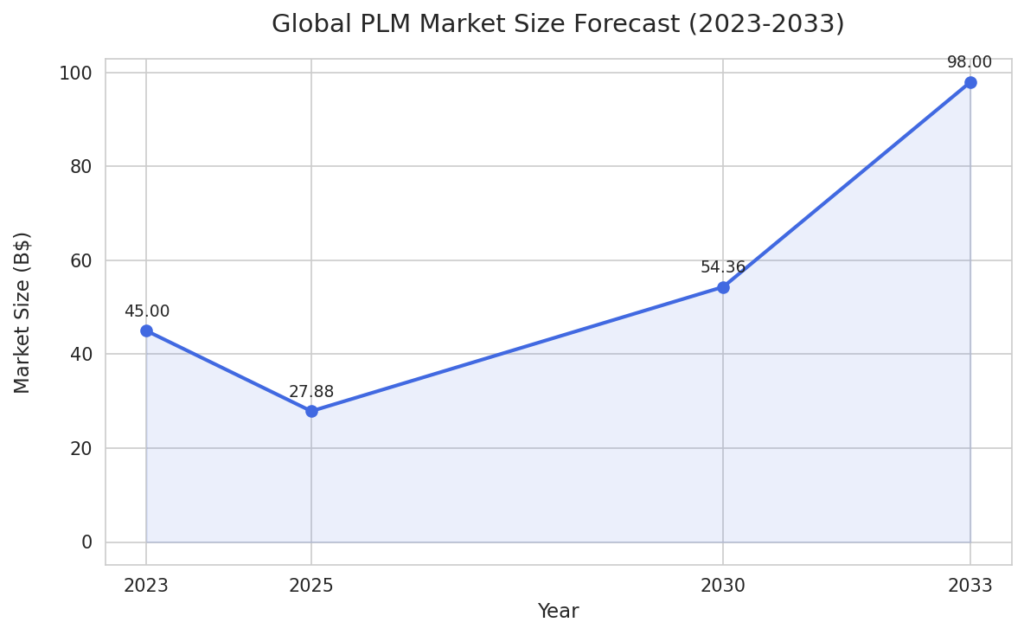
The US consumer sector, encompassing industries such as consumer packaged goods (CPG), retail, electronics, and food and beverage, is undergoing a digital transformation driven by the need for operational resilience, efficiency, and innovation. Legacy PLM systems, which have historically managed product data, engineering changes, and compliance documentation, are now being leveraged as valuable repositories of engineering and operational knowledge. The market for PLM solutions is robust and growing, with global PLM market size projected to reach $98 billion by 2033, and North America accounting for a significant share of this growth 1 2. The adoption of cloud-based, AI-enabled PLM platforms is accelerating, as companies seek to unlock the value embedded in decades of product and process data 3 4.
To further contextualize market growth, it’s important to note that approximately 72% of large manufacturing companies now rely on PLM software to manage product and engineering processes 5. The expanding footprint of PLM reflects not just a response to rising product complexity, but also the growing expectation for real-time, collaborative product development cycles. In recent years, cloud-based PLM solutions have observed a 36% surge in adoption. Companies recognize that PLM modernization is not only about product data consolidation, but also encompasses the introduction of AI, IoT, and advanced analytics to drive efficiency, compliance, and competitive differentiation 6. This evolution lays the groundwork for PLM to support not only traditional manufacturing operations, but also enable agile response to changing consumer demands, regulatory needs, and sustainability targets.
Within the US consumer sector, the utilization of legacy PLM data varies by industry segment and company size. Large CPG firms, for example, manage vast SKU portfolios and complex supply chains, making the integration of historical PLM data with modern analytics platforms critical for operational agility 7. As these enterprises typically oversee thousands of SKUs and millions of product placements, their legacy PLM systems often present challenges with data silos, slow update cycles, and delayed insights generation. The need for robust, scalable data orchestration becomes paramount, driving investments in AI-powered data engineering and integration platforms that can automate workflows, unlock real-time insights, and ensure accurate product information across omnichannel retail environments 8.
Midsize companies, benefiting from more agile IT environments, are often able to implement AI-powered PLM data initiatives more rapidly and cost-effectively than their larger counterparts 9. With fewer layers of approval and standardized infrastructure, midsize firms can pilot, refine, and deploy PLM modernization programs to achieve near-term returns, often becoming early adopters of generative AI and advanced analytics for supply chain, engineering, and vendor management.
The food and beverage, apparel, and electronics segments are particularly active in leveraging legacy PLM data to support rapid product development, regulatory compliance, and supply chain optimization 10 11. For example, electronics manufacturers rely on integrated PLM-ERP systems to synchronize engineering changes with procurement and production schedules, reducing latency between design improvements and field deployment. In food and beverage, leveraging legacy PLM data assists with cost scenario modeling, regulatory traceability, and automated supplier onboarding, expediting compliance and innovation initiatives 12. Apparel companies use PLM systems to optimize product portfolios, predict demand, and minimize rework.
Competitive Landscape
The competitive landscape is shaped by both established PLM vendors (e.g., Siemens, Dassault Systèmes, PTC, Centric Software) and emerging cloud-native providers (e.g., Propel, Duro, Backbone PLM) offering tailored solutions for consumer industries 13. These vendors increasingly differentiate by offering modular, cloud-native, and AI-driven platforms that can ingest, unify, and analyze complex datasets from legacy and real-time operational systems 4. Competition is also marked by the proliferation of open APIs, advanced data extraction tools, and real-time collaboration features designed to break down silos and enable continuous improvement.
Companies that successfully modernize their PLM data infrastructure and integrate advanced analytics gain a competitive edge through faster innovation cycles, improved product quality, and lower operational costs 14 15. The integration of vendor-managed PLM modules with customer PIM and CRM systems supports advanced analytics for customer-centric operations, proactive compliance, and tailored go-to-market approaches. Quantitatively, firms migrating to cloud-based PLM platforms have reported time-to-market acceleration of up to 30% and reductions in product development costs by 10–30% 16 17.
Conversely, firms that remain reliant on fragmented, legacy systems risk falling behind more agile competitors, particularly in e-commerce and direct-to-consumer channels 7. The rise of third-party sellers on digital platforms like Amazon, able to iterate faster on product detail pages and retail media spend, is a demonstration of how outdated PLM processes constrain innovation, responsiveness, and margin control.
Regulatory Environment
Regulatory compliance remains a critical driver for PLM data utilization. Legacy PLM systems often contain essential documentation for product safety, environmental standards, and labeling requirements. However, these records are only valuable if they can be rapidly extracted, validated, and updated in response to evolving standards. As regulations around sustainability, ingredient transparency, and consumer safety become stricter and more complex, companies are under pressure to modernize the extraction and synchronization of legacy compliance data 18. The inability to quickly access or adapt historical compliance records can result in delayed market entry, increased risk of product recalls, and significant cost overruns 18.
Integrating historical compliance data with current regulatory intelligence systems enables companies to accelerate product approvals, reduce the risk of recalls, and respond more quickly to evolving regulations 19. Leading PLM solutions now offer real-time dashboards to track regulatory changes and automate the flagging and remediation of non-compliant SKUs. Additionally, the growing importance of sustainability reporting (e.g., carbon footprint, ESG metrics) is placing further emphasis on the need for robust PLM data management that can aggregate historical data with real-time supply chain inputs 20 6.
Technological Advancements
Technological innovation is at the heart of legacy PLM data transformation. Key advancements include:
Cloud Migration: Moving legacy PLM data to cloud-native platforms enhances scalability, accessibility, and integration with other enterprise systems 4 21. Cloud PLM enables global collaboration, 24/7 access, and lower infrastructure footprint. It also supports easy scaling according to project complexity and allows integration with partner and supplier systems, ensuring that the “digital thread” spans the full lifecycle 22.
AI and Machine Learning: AI-driven analytics mine historical PLM data for engineering insights, predict trends, automate routine tasks, and support generative design and digital twin simulations 23 24 25. AI can analyze unstructured data, spot defect patterns, optimize costs through “what-if” scenario modeling, and drive continuous improvement in design, manufacturing, and maintenance 24 26. Generative AI can recommend alternate designs, materials, or supplier configurations to enhance performance, cost, and speed.
Data Integration Tools: Middleware, APIs, and ETL (Extract, Transform, Load) processes enable the consolidation of disparate legacy data sources into unified, actionable datasets 27 28. The latest tools can map data flows from legacy PDM/PLM, ERP, CAD, and operational sources, unifying them while maintaining audit trails and data lineage essential for compliance and engineering traceability 29.
Digital Twins and IoT: Integration of PLM data with IoT sensors and digital twins allows real-time monitoring, predictive maintenance, and virtual prototyping, reducing downtime and accelerating development 25 30. For example, digital twins can simulate manufacturing process changes or supplier substitutions using real legacy data sets, identifying optimization opportunities before physical investment.
Advanced Analytics Platforms: Business intelligence tools (e.g., Tableau, Power BI) and AI-powered data platforms (e.g., Amperity, Palantir) facilitate deep analysis and visualization of legacy PLM data for strategic decision-making 8 31. These platforms automate insights extraction, anomaly detection, and trend forecasting, providing real-time dashboards for cross-functional engineering, supply chain, and business leaders.
The rise of microservices architectures, open APIs, and composable PLM stacks further facilitate seamless integration and iterative modernization. Platform modularity allows organizations to add or sunset PLM functionalities in parallel with ongoing engineering operations, thereby reducing disruption and enhancing return on investment 32.
Future Forecast
Over the next three to five years, the integration of legacy PLM data with AI, cloud, and IoT technologies will become standard practice among leading US consumer companies. The market for PLM solutions is expected to grow at a CAGR of 7–10%, with cloud-based and AI-enabled platforms driving adoption 2 3. Firms are moving toward perpetual portfolio management and agile product engineering models, backed by advanced PLM analytics. Digital twins, generative design, and predictive analytics will be embedded in day-to-day workflows, tightly linking engineering, quality, marketing, and supply chain operations for seamless decision-making.
Companies that invest in data modernization and cross-functional integration will achieve faster innovation cycles, greater operational efficiency, and improved cost structures. They will also be able to adapt more rapidly to volatility in consumer demand, supply chain disruptions, or shifts in the regulatory landscape. In parallel, the proliferation of sustainable and compliant products will depend on the ability to integrate legacy environmental, quality, and compliance records with current operational data streams 6.
Strategic Insights
The continued evolution of digital twins, predictive analytics, and real-time data integration will further enhance engineering and operational outcomes. By 2026, more than half of PLM vendors are forecast to include GenAI capabilities, with real-time analytics and simulation becoming core to engineering workflows 43.
Data Modernization is Imperative: Incremental, ROI-driven modernization of legacy PLM data systems is more effective than wholesale replacement, enabling companies to manage technical debt and maintain business continuity 15 44. Starting with targeted, high-ROI integrations—such as supplier onboarding, cost scenario analytics, or recall risk dashboards—can yield quick wins and build support for broader transformation.
AI as a Competitive Necessity: AI-driven analytics and automation are essential for extracting actionable insights from legacy PLM data, supporting engineering innovation and operational efficiency 23 24. AI can be harnessed to automate defect identification, streamline change management, and accelerate product design cycles.
Cross-Functional Collaboration: Successful PLM data initiatives require close coordination between engineering, IT, operations, and business units, supported by robust change management and workforce upskilling 39 45. Investment in user training, change agents, and digital culture is as critical as systems investment.
Security and Compliance: As legacy PLM data is integrated with modern platforms, companies must prioritize data privacy, security, and regulatory compliance to mitigate risks 42. End-to-end data encryption, strict access controls, and adherence to privacy laws (e.g., CCPA) ensure secure, compliant operations in high-velocity environments.
Bimodal Modernization Approach: Best-in-class companies leverage a bimodal IT strategy, running incremental pilots for new PLM capabilities while keeping critical legacy systems running until safe switchover 46. This reduces risk, accelerates value realization, and avoids large-scale single-point failures.
Recommendations
Develop a Comprehensive Data Strategy: Assess the current state of legacy PLM data, prioritize data cleansing and quality, and establish a phased roadmap for integration with modern platforms 47 48. Focus on high-value data sets, document current system dependencies, and establish clear KPIs for modernization.
Invest in Cloud and AI Technologies: Migrate legacy PLM data to cloud-native platforms and deploy AI-driven analytics to unlock engineering insights and automate routine processes 4 3. Prioritize platforms that support open APIs, modular upgrades, and secure data migration processes.
Foster Organizational Agility: Empower cross-functional teams, invest in workforce training, and promote a culture of data-driven decision-making to accelerate adoption and maximize value 39 49. Use peer networks, change champions, and iterative engagement to overcome resistance.
Prioritize Security and Compliance: Implement robust data governance frameworks and ensure compliance with evolving regulatory requirements as legacy data is integrated and shared 42 18. Regularly audit data architectures, conduct security training, and stay abreast of regulatory trends.
Leverage Incremental Modernization: Adopt an iterative approach to legacy system integration, starting with high-ROI projects and scaling successful initiatives across the organization 15 42. Use hybrid migration strategies—phased functional pilots with continuous validation—to manage business risk while delivering early improvements.
Appendices and Data Sources
- [1] Product Lifecycle Management (PLM) Market Report – Fact.MR —> Google
- [2] Product Lifecycle Management (PLM) Market Size, Share, 2032 – Fortune Business Insights —> Google
- [3] Top 7 PLM Trends for 2024-25: Driving Innovation – Modelcam Technologies —> Google
- [4] Legacy PLMs are Sunsetting Moving to the Cloud Offers a New Approach to Managing Data —> Google
- [5] Product Lifecycle Management (PLM) Market Share & Trends 2033 —> Google
- [6] PLM in Consumer Goods Market Report | Global Forecast From 2025 To 2033 – Dataintelo —> Google
- [10] CPG PLM Software | PLM for Consumer Goods | Centric —> Google
- [11] How PLM Can Shorten The Time to Market for Fashion Brands – ApparelMagic —> Google
- [12] Slice Through Costing Complexity With PLM – Centric Software —> Google
- [13] Top 20 product lifecycle management software providers in 2025 —> Google
- [16] 5 Ways PLM Can Save Your Company Millions – Modelcam Technologies —> Google
- [17] Product Lifecycle Management (PLM): Integrating Engineering and Shop Floor —> Google
- [19] How US Tariff Laws Impact Manufacturing Companies Globally – Centric Software —> Google
- [20] 32212 Paper Mills in the US Industry Report.pdf —> IBIS World
- [22] Modern PLM Data Management Stack – Beyond PLM (Product Lifecycle Management) Blog —> Google
- [24] AI in PLM: Transforming Product Lifecycle Management for the Digital Age – RFID JOURNAL —> Google
- [26] How is the integration of AI and machine learning transforming traditional PLM processes? – Product Lifecycle – Flevy.com —> Google
- [27] Legacy System Integration Challenges and Strategies – WaferWire —> Google
- [28] Integrating Legacy Data: A Perennial PLM Pain Point – Digital Engineering 24/7 —> Google
- [29] PLM 2030: Challenges and Opportunities of Data Lifecycle Management – Beyond PLM —> Google
- [30] Future Trends in PLM: What Engineering Leaders Need to Know – SPK and Associates —> Google
- [32] The Top Three Product Lifecycle Management Trends Taking Shape Across the Digital Economy – Cognizant —> Google
- [34] Case Studies of Successful Product Lifecycle Management in Industry – Google Docs —> Google
- [38] 6 Critical Limitations of Legacy PLM – Converged by Propel —> Google
- [43] The future of product lifecycle management: trends reshaping manufacturing —> Google
- [46] PLM Migration Solution for Data Migration | PROSTEP —> Google
- [47] PLM Data Migration Strategies —> Google
- [48] PLM Migration: A Guide to Best Practices & Strategies – Centric Software —> Google
- [7] 5 Charts Showing How Big CPGs Are Losing to Third-Party Sellers on Amazon —> Dow Jones
- [8] ADWEEK Tech Stack Awards: The AI, UX, Data, and CRM Solutions to Your 21st Century Problems —> Dow Jones
- [9] Why Midsize Companies Are Best Positioned to Thrive in the Age of AI —> Dow Jones
- [18] Delays on limiting plastic left enormous health toll —> Dow Jones
- [31] Palantir Zooms Into Buy Zone After Contract Wins, Earnings Beat —> Dow Jones
- [33] 9 Brands That Doubled Down On AI in 2025 —> Dow Jones
- [35] Palantir Wins U.S. Navy Contract For Nuclear Submarine Fleet. Potential Bigger Than Maven? —> Dow Jones
- [36] AI, Data Center Boom Fuels 190% Rally For Celestica. Is More Growth Ahead? —> Dow Jones
- [37] How 12 Business Owners Plan to Save Money in 2026 —> Dow Jones
- [39] Change Management Is Broken. These 4 Numbers Explain Why —> Dow Jones
- [45] Honeywell targets UNC Charlotte STEM students in $10M partnership deal —> Dow Jones
- [49] How Brain Science Powers Purpose-Driven Change —> Dow Jones